
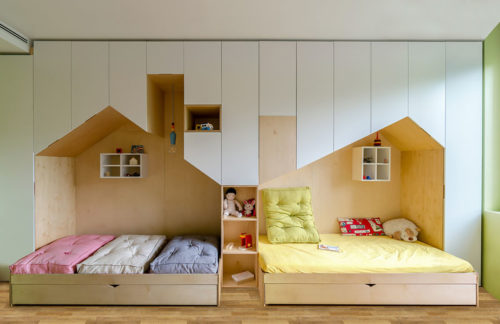
This fun design for the small kids’ bedroom was completed by Bulgarian bureau Another Studio. They created two custom house-shaped beds, completely surrounded by shelving. The bases of the beds serve as storage too. Additional small shelves emulate house windows, which is my favorite element in the entire concept. And once all this custom shelving is used to store kids’ paraphernalia, the rest of the room appears quite spacious. More photos after the break.
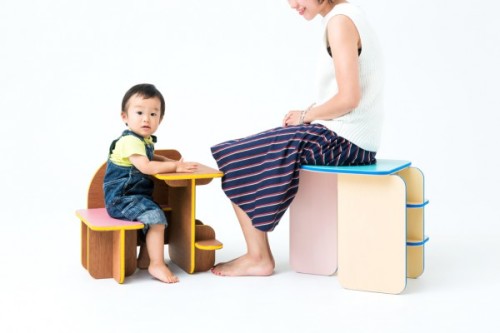
This cute and clever piece of furniture, called Dice, has been created by Japanese studio Torafu Architects. Resembling rolling of a dice, the piece reveals different sides and functions. Envisioned as children’s furniture that can grow with its owner, Dice starts its life as a little desk and chair for a toddler. It continues as a shelf or a stool with extra storage. Dice will be manufactured by furniture maker Tanseisha.
(via spoon & tamago)
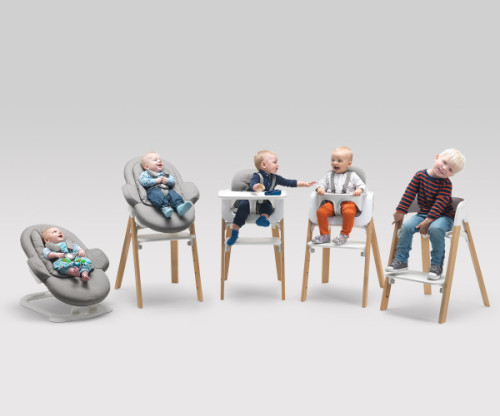
Steps chair by Norwegian company Stokke is designed to adapt to the child’s growth, step by step (hence the name). This modular system will accomodate a baby of 3 to 10 years of age. It can be transformed from a bouncer into a child’s char and everything in between. The piece is made from solid beechwood and PPC-PA, it comes in a variety of colors.
Rocky bed totally rocks. In many senses than one. This convertible children’s bed from studio jäll & tofta is a product that grows with the child. At the beginning, it serves as a combination of a cradle and a rocking chair. When the baby grows out of the nursery into a bigger kid’s room, simply flip it over to create a 140 cm long bed with a removable bedrail. The space underneath can double as storage (or as an awesome fort for games). Watch the video above to see all the transformations of the piece.
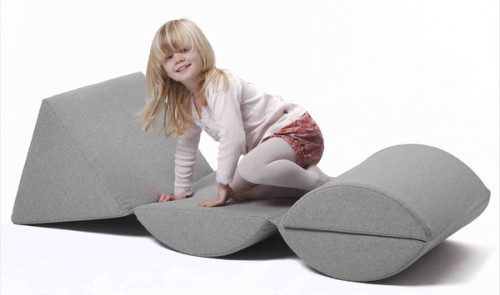
Roll is a versatile piece designed for children’s rooms by Danish company Utzon Kids. Playful and interactive, it transforms into many different shapes. One minute, it’s a chair, then a lounger, and next a little cave to hide in. Thanks to its ability to change shape and purpose, Roll can help children to develop their creative sides and motor skills. It can grow with its owner too. When the age of pillow castles is over, Roll can be upcycled into a lounge chair or a pouf.
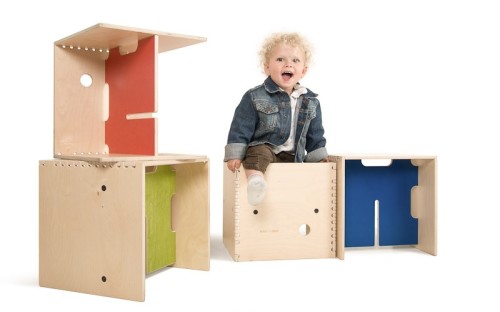
MAXintheBOX is a cool modular item, designed by Thomas Maitz for German furniture brans Perludi. Made for children from 10 months and older, the piece can have many functions. It can work as a classic table-chair combination, as stools of flexible height, as storage for books and toys, or simply as a playtime companion. Made from birch plywood, it is sturdy and abuse-resistant. MAXintheBOX is easy to assemble and dismantle for easy storage.
(thank you, Peter)
Barcelona based company Arasanz has decided that sharing a bedroom with a sibling doesn’t have to mean style and space compromises. That’s why their Cromatic collection of kids’ bedroom furniture allows every child to express his or her individuality without stepping onto somebody else’s. The range of furniture includes bed, storage and desks that can be configured in a number of different ways. All of the furniture is on casters, making it simple to move around into different positions in the room. Each configuration is designed to take little space and allow multiple activities. Moving and transforming the pieces is easy enough for kinds to handle. Watch the video above to see this idea in action.
(via dornob)
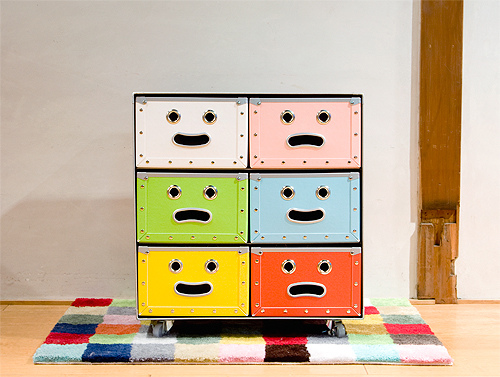
This funny-face storage has been created by Japanese design studio Iremonya. The line, based on a system of drawers made of the eco-friendly recycled fiber board, is perfect for a kids room. Each drawer has two faces on each side, a smiling face and a crying face. Designers say that this concept symbolizes the fact that life contains both tears and laughter. Cute.
(via ginkgo telegraph)
Editor’s note: This is a guest post from Donald M. Rattner.
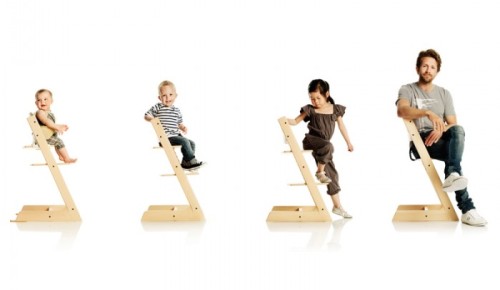
In 1972, Scandinavian designer named Peter Opsvik took it on himself to revolutionize the design of infant high chairs after watching his son’s struggles with table eating. The result was the Tripp Trapp Convertible High Chair.
Opsvik’s thoughtful response to the challenges of early eating stages was to more fully engage the child with loved ones by making it possible to slide the chair right up to the table without an intervening tray. Presciently, he also designed the chair to accommodate growth by making its various parts adjustable, thus anticipating today’s cradle-to-college design philosophy and its associated environmentalism.
Winner of multiple awards, the Tripp Chair was selected as the signature piece at MoMA’s 2012 exhibition “Century of the Child”. Check out the wonderful video produced by the museum. Purchase here.


Editor’s note: This is a guest post from Donald M. Rattner.
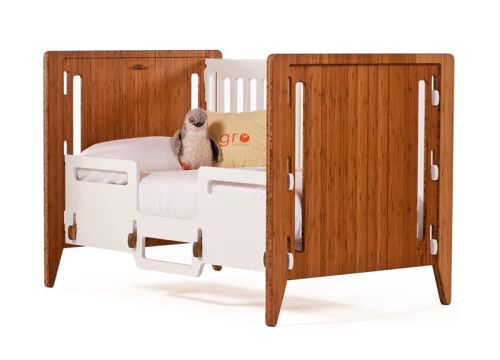
GRO furniture is a remarkable solution to a fact of life: very little about a child stays the same for long. As most parents can attest, that can make things pretty expensive pretty fast. GRO’s genius is to turn this reality to advantage by designing a piece of children’s furniture that will change as the child changes – and change back when it’s time to pass it on to the next generation or sibling. In between it can break down and be stored flat-packed for space saving.
Things start, naturally, with the crib. As the child grows the crib will convert to a toddler bed, then to a daybed, next to a play table, and finally to a desk – all using simple conversion kits. This makes GRO furniture a potentially multi-generational cradle-to-college design solution.
GRO was designed by two architects, a fact reflected in its quality of construction and easy, hardware- and fastener-free assembly. Made in the USA.
