Twist is a stackable bookcase created by Giuseppe Bavuso for Alivar. The idea was to create a versatile and visually stimulating storage unit, suitable for any room. The final product fills the bill brilliantly, and then some. Twist can be used as a bookcase, a display unit, a night stand, even a pouf, if used with a cushion. Stackable components are made out of the Hi MACS acrylic stone. The units are divided by the glass shelves, which makes them even more light and airy. The illusion of irregular cubic shapes is a nice touch, it creates beautiful dynamic.


The words ‘modular’ and ‘customizable’ are music to our ears, especially if we live in an awkward and/or limited space. Consider the Cocoon, a versatile shelving unit created for Ideal Form Team by the Italian designer Paola Navone. The Cocoon allows all customization imaginable – the shelf can be built to fit any space and any stylistic preference. You can choose between open and closed storage, various effects and finishes, several digitally printed designs… The combinations are endless. As is fun to pick and change them.


It is always nice when a piece of furniture has a soul. Even if it is a mysterious Russian one. This unusual object, called Tipsy Star, was created by the Moscow-based designer Alexander Matveyev. Envisioned as a chair-transformer, the piece is build around a titanium frame with hinges, which allow it to take and retain many shapes. The Tipsy Star is incredibly versatile, it can serve as a chair, a stool, an ottoman, a mat… Made out of a poliurethane foam and covered by a durable upholstery fabric, it requires very little maintenance. It might be the first tipsy thing you will actually like having round…


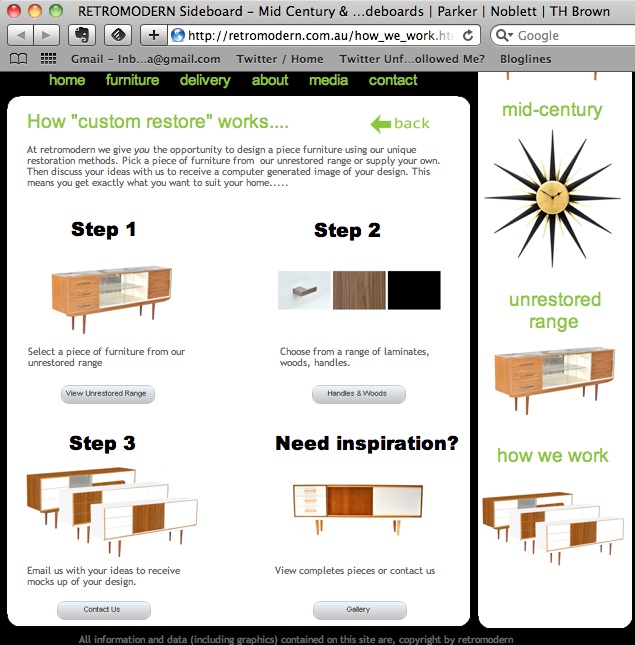
This furniture has practically everything we, design-conscious shoebox dwellers, adore. It is recycled, gives a cool retro flair to the room and allows us to participate in the designing process. The Australia-based restoration company Retro Modern found a clever way to bring old midcentury furniture into modern homes. We are invited to select an object, pick finishes and hardware, email our design to RM and get their mock up. A couple of weeks after approving the mock up, we will receive the completed piece and bask in glory of our choices. The initial item can be picked from the Retro Modern gallery or provided by the client. So, this might be a good way to breathe a new life into some old family heirlooms.


As the world is increasingly switching to energy-saving lighting, nostalgia enters designers’ hearts. The good old Edison’s lightbulb makes a comeback, if not in function, at least in its warm and familiar shape. This sentimental product from Vienna-based designer Maciej Chmara is called Sympathy for the Bulb. It masks the energy-saving bulb inside the more rounded and traditional aperture. Note the clever packaging – another emotional aspect of the piece.


Every home has awkward areas we do not quite know what to do with. Entryways, spaces beneath the windows, uncomfortable corners… A piece that would humanize those areas would be a blessing for any interior. Meet the Weigel Bench, a recent creation from Square Form, originally made as a shoe rack for the entryway of the client’s home. The understated beauty and functionality of the piece earned it a new licence to live. Made out of noble and natural materials (salvaged 5/4″ western walnut, salvaged Alder, and steel tubing), the Weigel Bench adds class, warmth and a much-needed storage to any space.


 This little folding chair was created by the Finish born and Paris based designer Elisa Honkanen, who proved once again that even inexpensive, utilitarian and temporary things can add delight to our lives. Hasta chair consists of two components – folding tripod and a cotton cover, which resembles kids ‘tell the fortune’ paper game. The beauty of the piece comes from its lightness and naive, even childlike simplicity. But in fact, to achieve the effect, the designer had to experiment a lot with textures and proportions. The piece is currently on show at the Making Of exhibition in Paris.


It is the exhibition season, and no design dialogue would be complete without mentioning of Heimtextil 2011, which came to a close on January 15th in Frankfurt. Among the highlights of the fair was Karim Rashid‘s blinds collection for Velux, called Blackout. The product name seems a bit absurd to a design nerd like me. Rashid, the word’s biggest evangelist of light, is commissioned to create a blackout? ‘Daylight is essential for our well-being and ability to think positively, – the designer says, – However, to create an intimate and recreational space, light control is an absolute must – for sleeping, working or privacy… I was excited to get to work with light versus darkness. Blackout blinds are the key to maintaining a satisfying sleep cycle and ideal for bedrooms and other spaces where complete light control is a must.’ The collection consists of four patterns, each in three pallets. We can choose from Karim’s signature pink, acid green and conservative black-and-white. Inspired by digital technology, the designs have metallic accents creating an interesting texture.


This is the second decade of the 21st century, and even though flying cars are sill in the wish-list, some cool things are already out. This lamp for example. What can be more futuristic than drawing out light with your hands? Having been shown at Imm Cologne last week, Rima desk lamp by Dreipuls became a huge hit. Its innovative mechanism contains a series of LED lights, that are controlled by sliding rings along the metal rail. The rings are detected by the optical sensors, and the light emerges. The item had won the prestigious red dot award in 2010.


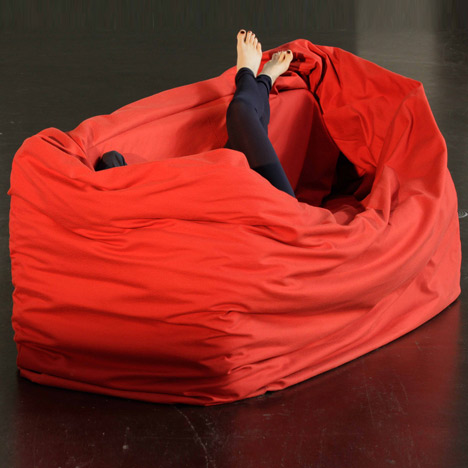
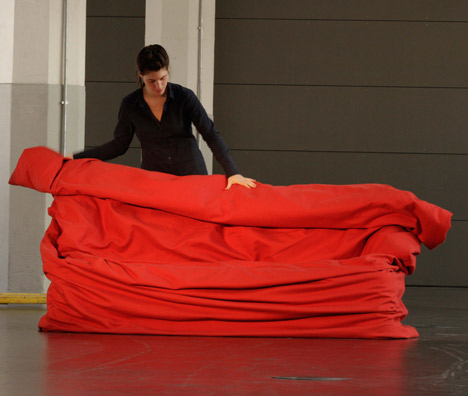
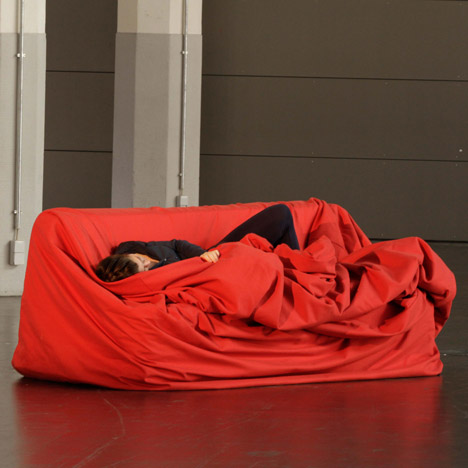
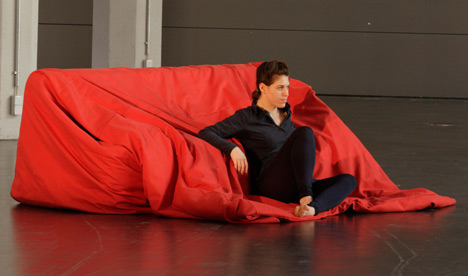
More news from the Cologne 2011. This unusual piece earned its creator Hanna Emelie Ernsting the second place in this year’s [D3] Talents Competition. Moody couch got its name for its ability to take and retain many shapes. The transformation is achieved thanks to the extended textile cover, which can be draped around the base in many different ways. A high quality cotton upholstery is reinforced by wadding, making the material more luxurious and also able to hold the desired form. Thus, the object can respond to changes in environment and user’s emotional state. The designer calls this concept – ‘form follows moods.’ By detaching cover from the base and giving it freedom, Ernsting created a piece of furniture that is as flexible as fabric. A couch that can wrap around you after a long day – who would not like that…
Source: Dezeen